










 |
 |
 |
 |
The IgG ELISA Food Intolerance Test
Better Control of Health's IgG ELISA Food Intolerance Test utilizes the ELISA (Enzyme Linked Immunosorbent Assay) method to detect circulating IgG (Immunoglobulin G) antibodies, which recognize and bind to food antigens.
The ELISA method is used extensively in immunology and biochemistry. The technique has been shown to be reliable and reproducible in detecting a variety of antibodies and antigens of clinical importance.
In the ELISA method, food antigens are immobilized on to the surface of polystyrene micro-titre plates. To protect the unstable antigens, the micro-wells are then further coated with a stabilizing polymer layer, which is dried on top of the food antigens. Additionally, our food extracts are obtained from FDA approved sources to ensure the highest quality extracts and lot-to-lot reproducibility. The coating levels of the extracts have been optimized for sensitivity to ensure the reactions identified are real rather than false positive reactions (something which plagues other competing tests).
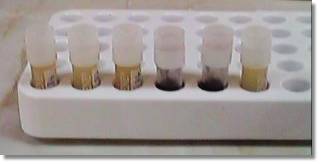
The measurement of food antibody levels depends on the ability of the patient's food antibodies to attach themselves specifically to the food antigen. After the antibody has bound to the antigen, the micro-titre plates are rinsed to remove other antibodies and blood constituents. The food antibodies are then detected using a second antibody which is chemically tagged with an enzyme. The enzyme causes a color to develop at the end of the process. The color density obtained is an accurate indication of the original anti-food antibody concentration in the patients blood sample.
The color produced by calibrated antibody reference standards is compared with the patient's result, allowing the laboratory to accurately estimate the amount of each food antibody. The laboratory then interprets the results and places each food in the relevant category of "no reaction", "rotate" or "avoid". A positive control sample is always included in each test to confirm that the assay system is working correctly.
The "Finger-Stick" Method
Just as different facilities have different qualities of tests, so do they have different specimen requirements. Some laboratories in the food intolerance industry require 1-3 full tubes of whole blood while others might require as little as less than 1cc of a blood specimen.
Better Control of Health made the painstaking effort to introduce to the USA the IgG ELISA food intolerance "finger-stick" technology in the late 1990's, which is now recognized internationally.
Here is how it works:
Step # 1:
The patient's hands are washed with warm water and dried thoroughly.*
The patient's hands are washed with warm water and dried thoroughly.*
Step # 2:
The area where the blood specimen will be collected is further sterilized with the provided alcohol swab. (Note: Many medical professionals report the side of the tip of ether the finger or thumb as being an ideal location to have the blood specimen collected from.)*
The area where the blood specimen will be collected is further sterilized with the provided alcohol swab. (Note: Many medical professionals report the side of the tip of ether the finger or thumb as being an ideal location to have the blood specimen collected from.)*
Step # 3:
Twist the cap of the provided lancet off. (Refer to step-by-step illustrated instructions included with the kit.)
Twist the cap of the provided lancet off. (Refer to step-by-step illustrated instructions included with the kit.)
Step # 4:
The opened lancet is firmly pressed against the area to be "pricked". The end of the lancet (plunger) is quickly depressed so to deploy the sterile device, which will "prick" the finger or thumb. (Note: Each lancet is used only once per individual and for a single specimen collection.)
The opened lancet is firmly pressed against the area to be "pricked". The end of the lancet (plunger) is quickly depressed so to deploy the sterile device, which will "prick" the finger or thumb. (Note: Each lancet is used only once per individual and for a single specimen collection.)
Step # 5:
The finger or thumb is massaged from the base and worked up to the area "pricked". This forms a small droplet of blood, which is collected for testing.
The finger or thumb is massaged from the base and worked up to the area "pricked". This forms a small droplet of blood, which is collected for testing.
Step # 6:
The fiber pad on the end of the small collection strip is a proprietary, detergent-coated material; which preserves the specimen in a "dry" state until it can be received for analysis. Place the fiber pad against the blood on the finger or thumb. The blood will be absorbed into the pad. The pad MUST be completely colored "red" from end to end in order for the test to be performed.
The fiber pad on the end of the small collection strip is a proprietary, detergent-coated material; which preserves the specimen in a "dry" state until it can be received for analysis. Place the fiber pad against the blood on the finger or thumb. The blood will be absorbed into the pad. The pad MUST be completely colored "red" from end to end in order for the test to be performed.
Step # 7:
After air drying, the soaked pad is then inserted into the provided transportation package, which is included with the kit. The patient's name is clearly written to the outside of the transportation package as it appears written on the required paperwork, which is also included with the kit.
After air drying, the soaked pad is then inserted into the provided transportation package, which is included with the kit. The patient's name is clearly written to the outside of the transportation package as it appears written on the required paperwork, which is also included with the kit.
Step # 8:
Everything is then shipped in the provided postage-paid return mailer.
Everything is then shipped in the provided postage-paid return mailer.
* Note: Please fully review the illustrated, step-by-step instructions included in the kit before performing the above steps.
All that is now left to do is to have the US Postal Service deliver your specimen. Once your specimen has been processed, the results will be sent directly to you along with your Optimum Health Resource Guidebook.
Additionally, anyone whose specimen is screened through our facility for IgG-mediated food allergy (food intolerance) is provided 12 months of complimentary telephone and email support at no additional cost!
You can order your very own at-home, finger-stick 96-Food IgG ELISA Food Intolerance Test HERE.
Content © 1999-2016
Better Control of Health (BCH)
(706) 485-4945
info@bettercontrolofhealth.com